AI Needs Nuclear Energy
The electricity needs of artificial intelligence is going to reshape the U.S. energy market. Nuclear energy for a long time was not considered as a future energy.
Today, the reality is that nuclear energy may be one of the most credible solutions to meet this demand.
A data center used for a large language model consumes almost as much energy than an average city. For instance, GPU H100 of Nvidia consumes almost 700 watts continuously [1]. A data center can contain tens to hundreds of thousands of these chips. Add cooling systems, networking infrastructure, power conversion, and backup systems and you get an electricity demand growing at a pace the U.S. grid has not experienced in decades.
In 2024, U.S. data centers consumed an estimated 177–192 TWh of electricity, according to Electric Power Research Institute (EPRI) [2]. By 2030, that demand could rise to approximately 380–790 TWh per year, driven largely by the rapid growth of AI workloads (see Fig. 1). This would make data centers one of the most important new drivers of U.S. electricity demand.
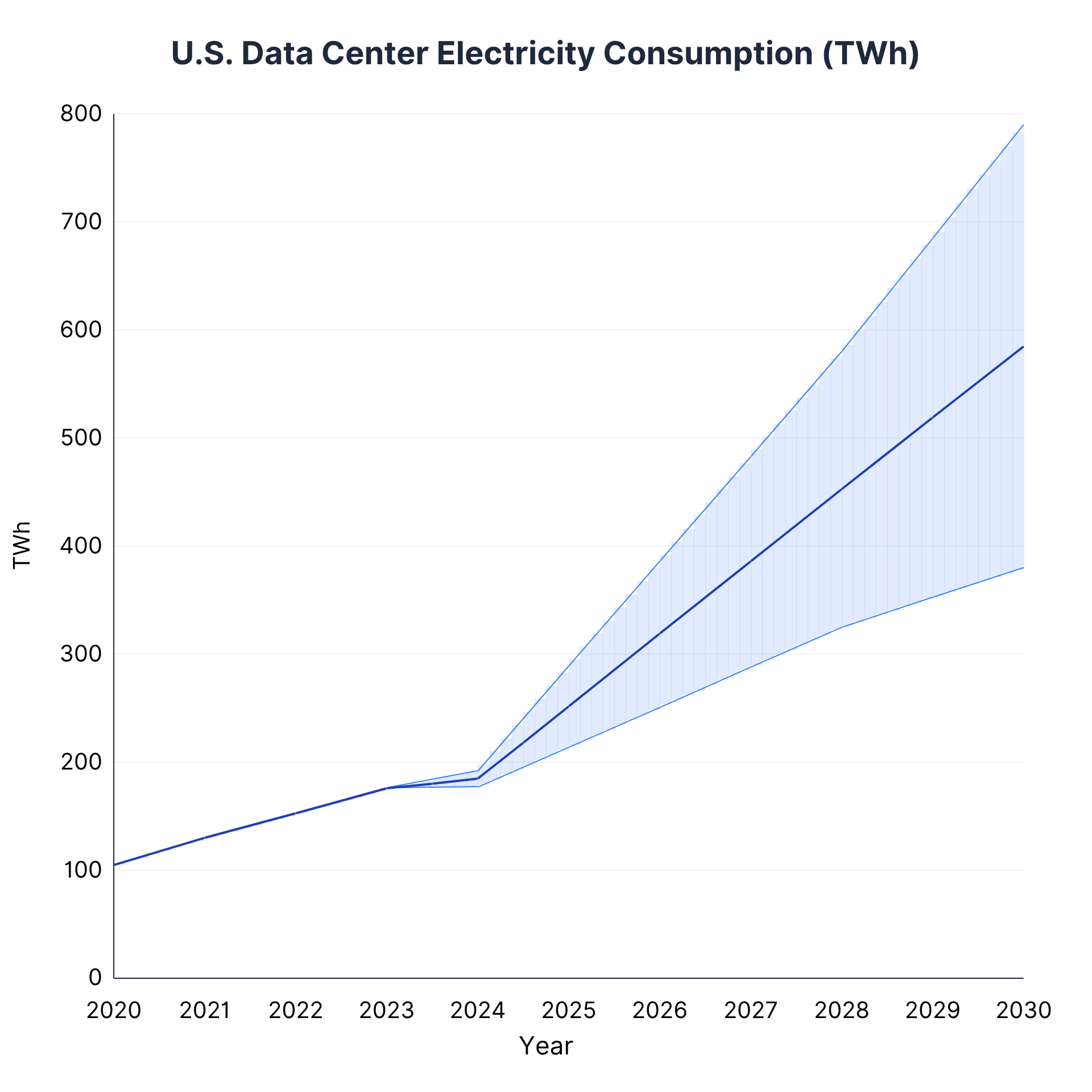
Figure 1: U.S. data center electricity consumption, 2020–2030 (terawatt-hours per year).
Data Sources: U.S. Department of Energy / Lawrence Berkeley National Laboratory, 2024 United States Data Center Energy Usage Report, Fig. 5.5, 2024. Electric Power Research Institute, Powering Intelligence: Analyzing Artificial Intelligence and Data Center Energy Consumption, 2026. Historical values through 2023 are based on DOE/LBNL. The 2024 estimate and 2030 scenario range are based on EPRI. Values for 2025–2029 are linearly interpolated for visualization only and should not be interpreted as official annual estimates.
Why Nuclear, Not Renewables Alone?
Solar and wind have a critical limitation for AI operators: intermittency. Data centers require continuous power.
Natural gas still supplies about 40% of U.S. electricity generation today [3] but it emits CO₂ and exposes operators to fuel-price volatility. Nuclear power offers the multi-year price stability companies are looking for, in addition to its low-carbon value proposition.
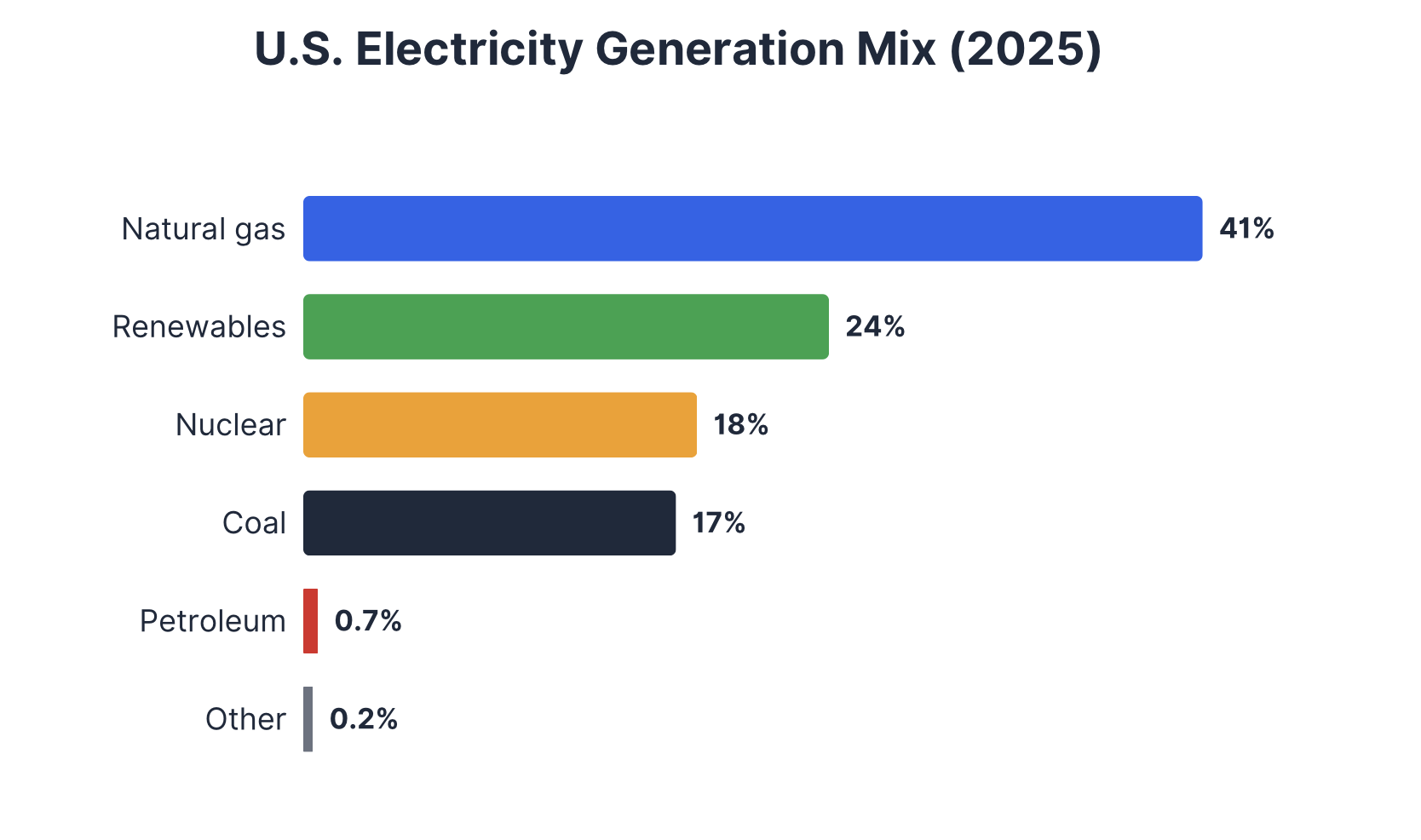
Figure 2: U.S. electricity generation mix by energy source in 2025 (% of total electricity generation).
Data Sources: U.S. Energy Information Administration: Electricity Explained: Electricity in the United States, 2025 data. U.S. Energy Information Administration: Electric Power Monthly, Table 1.1, Net Generation by Energy Source, Total All Sectors, 2025.
Big Tech Turns to Nuclear Power
What was still largely theoretical in 2023 has become a commercial reality in 2025–2026. The world’s largest technology companies are signing long-term nuclear power agreements, reshaping the fundamentals of the U.S. energy sector.
Microsoft & Constellation / Crane Clean Energy Center: 835 MW restart of the former Three Mile Island Unit 1, with expected operation around 2027–2028 [4].
Google & Kairos Power: up to 500 MW of advanced nuclear capacity through multiple SMR deployments, with the first unit targeted around 2030 and additional deployments through 2035 [5-6].
Amazon & Talen Energy / Susquehanna: up to 1,920 MW of nuclear power from the existing Susquehanna nuclear plant [7].
Amazon & X-energy / Energy Northwest: initial 320 MW SMR project, expandable to 960 MW supporting a broader advanced nuclear deployment pathway in the 2030s [8].
Meta & TerraPower / Natrium: agreement for up to eight Natrium advanced nuclear plants, representing up to approximately 2.8 GW of baseload capacity [9].
Challenges That Still Need to Be Solved
The nuclear renaissance is real but the structural challenges should not be underestimated.
Construction timelines
SMRs are designed to be faster and more modular to build than traditional large nuclear reactors. However, first-of-a-kind SMRs are still unlikely to reach commercial-scale deployment before the early 2030s because of licensing, supply-chain and deployment challenges.
HALEU fuel supply
Many advanced reactor designs require high-assay low-enriched uranium (HALEU). The U.S. supply chain remains limited and exposed to geopolitical and industrial constraints (see Insight Nuclear Supply Chains).
Workforce constraints
The U.S. nuclear industry faces a shortage of qualified engineers, technicians, operators and regulatory specialists after decades of underinvestment. Recruitment, training, and knowledge transfer are becoming critical deployment constraints.
NRC licensing
Despite recent reforms, licensing timelines remain long for new reactor designs. NuScale’s US460 standard design approval, granted in May 2025 after years of review, illustrates both the progress being made and the time required to move advanced nuclear technologies through the regulatory process.
Nuclear energy may be the most credible solution available at scale for AI’s growing power demand. In the context of climate change, the nuclear renaissance could also become part of the broader energy solution. The real question is execution: reactor construction timelines, supply chains and NRC licensing will determine its future.
Stratomic helps organizations assess nuclear-sector risks, identify strategic dependencies, and translate technical complexity into actionable decisions.
Stratomic. Where nuclear expertise meets strategic vision.
References
[1] TRG Datacenters, “NVIDIA H100 Power Consumption Guide,” TRG Datacenters.
[2] Electric Power Research Institute, “Powering Intelligence 2026: Updated Scenarios of U.S. Data Center Electricity Use and Power Strategies,” EPRI, Palo Alto, CA, USA, 2026.
[3] U.S. Energy Information Administration, “Electricity in the United States,” Energy Explained, 2025.
[4] U.S. Department of Energy, “Energy Department Closes Loan to Restart Nuclear Power Plant in Pennsylvania,” Nov. 19, 2025.
[5] Google, “New nuclear clean energy agreement with Kairos Power,” Oct. 14, 2024.
[6] Kairos Power, “Kairos Power and Google Partner to Deploy 500 MW of Clean Electricity Generation,” Oct. 14, 2024.
[7] Talen Energy, “Talen Energy Expands Nuclear Energy Relationship with Amazon,” Jun. 11, 2025.
[8] Amazon, “Amazon signs agreements to support development of nuclear energy projects,” Oct. 16, 2024.
[9] TerraPower, “TerraPower and Meta Enter Agreement for 8 Natrium® Advanced Nuclear Plants,” Jan. 9, 2026.
[10] Meta, “Meta Announces Nuclear Energy Projects, Unlocking Up to 5 GW of Nuclear Energy,” Jan. 9, 2026.